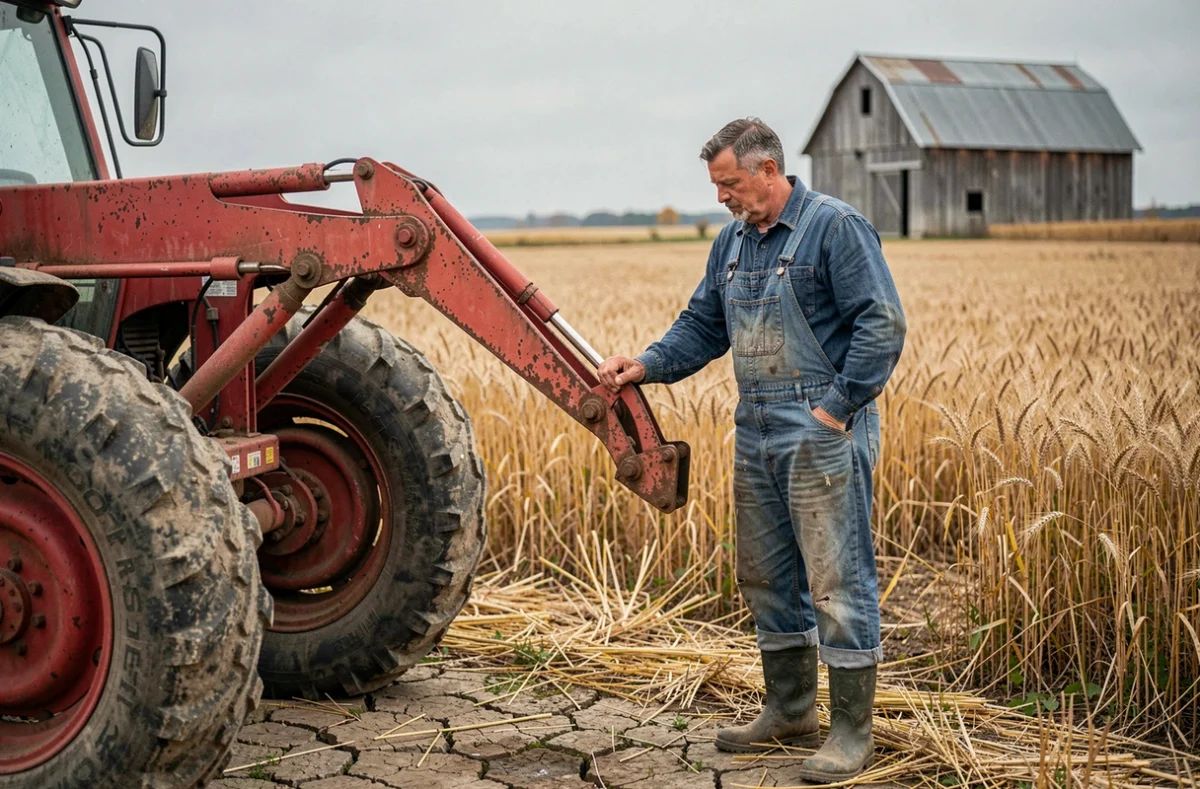
A hydraulic hose failing on a round baler in the middle of haymaking can turn the whole day upside down. By the time you wait for the part and find an available repairer, the hay has been rained on. Scenarios like this prompt farmers to rethink how they choose agricultural equipment: not just by looking at the spec sheet, but by considering whether it can keep pace without forced downtime.
Repairability of agricultural equipment: the factor the spec sheet doesn’t show
On paper, two machines may offer comparable performance. The difference becomes clear when something breaks down. Equipment whose parts are available from the local dealer within 24 hours is a very different proposition from a model whose supply chain runs through a central warehouse several days away.
Agricultural repairs commonly involve engines, hydraulic and pneumatic systems, brakes and electrical circuits. Before buying, it’s worth checking three practical points: Can the nearest dealer or repairer come out to the farm? Do they stock common wear parts for this brand? What is their average response time during peak season?
A repair delay in the middle of the season often costs more than the price difference between two models. You can compare product ranges by browsing the equipment offered by Loisiragri, which brings together a range of options suited to farms of different sizes.
This trade-off between raw performance and local serviceability changes how you rank your priorities. A slightly less powerful tractor or implement, with every component available nearby, can deliver greater real-world availability throughout the season.
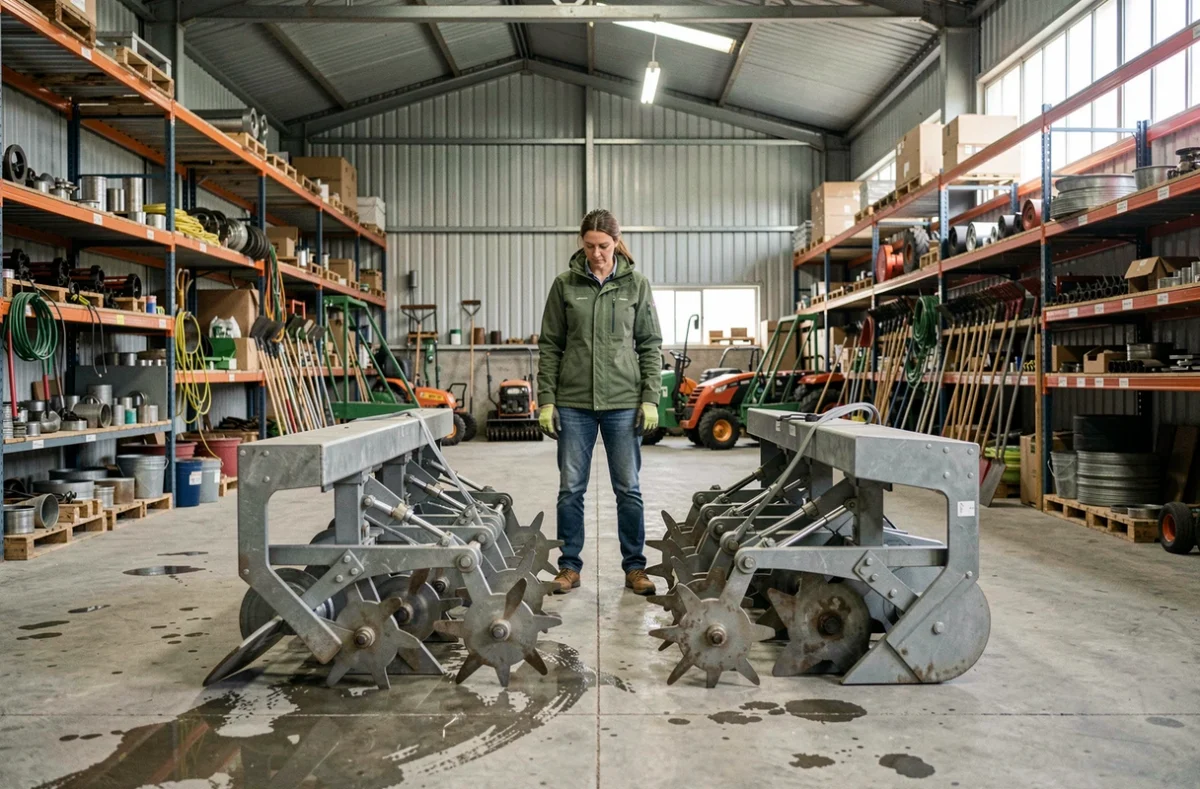
Compliance and safety: what to check when buying used equipment
The used market accounts for a significant share of agricultural equipment sales. Buyers tend to check the mechanical condition and price, but often overlook regulatory requirements, which can prevent a machine from being put into service or expose the farm operator to liability.
CE marking and certificate of conformity
CE marking alone does not prove that a used machine is compliant. When a machine intended for work is sold, rented or loaned, the seller must provide a certificate of conformity. When buying, ask for this document and check that it matches the model and serial number.
Rollover protection and seat belts on tractors
Tractors used on a farm must be fitted with a rollover protection structure. If a seat belt is fitted, it must be worn. When buying a used tractor, the condition and compatibility of these safety features are selection criteria, not optional extras. A bent roll bar or a missing seat belt is a reason to walk away, not an opportunity to negotiate the price.
Preparing for European Regulation (EU) 2023/1230
For machinery purchased or put into service from 20 January 2027, the new European Machinery Regulation will replace the current directive. When buying new equipment, ask the seller which regulations and declaration of conformity apply to the unit being delivered. The date the machine is placed on the market is what counts, not its manufacturing date.
Choosing agricultural equipment for your type of farm
The way you choose an implement depends on whether you work in arable farming, livestock or market gardening. Soil conditions, field layout and available labour all influence the choice, as much as the budget does.
Here are the criteria that vary most from one farm to another:
- Working width and implement size, which should suit field dimensions and access routes. Equipment that is too wide for narrow fields leads to unnecessary manoeuvring and premature wear.
- Compatibility with your existing tractor (three-point hitch, power take-off, hydraulic system). A high-performance implement attached to an undersized tractor will work poorly and wear out quickly.
- The machine’s actual versatility, distinguishing between functions used every day and those needed for only a few days a year. For the latter, renting or sharing equipment with other farmers is often a better option.
- The predominant soil type: heavy clay puts different demands on implements than sandy soil. Wear parts (shares, discs, tines) and their local availability are directly relevant to the calculation.
A common pitfall is buying oversized equipment. You end up with machinery designed for a higher work rate than the farm actually needs, increasing maintenance costs and fuel consumption without a proportional benefit.
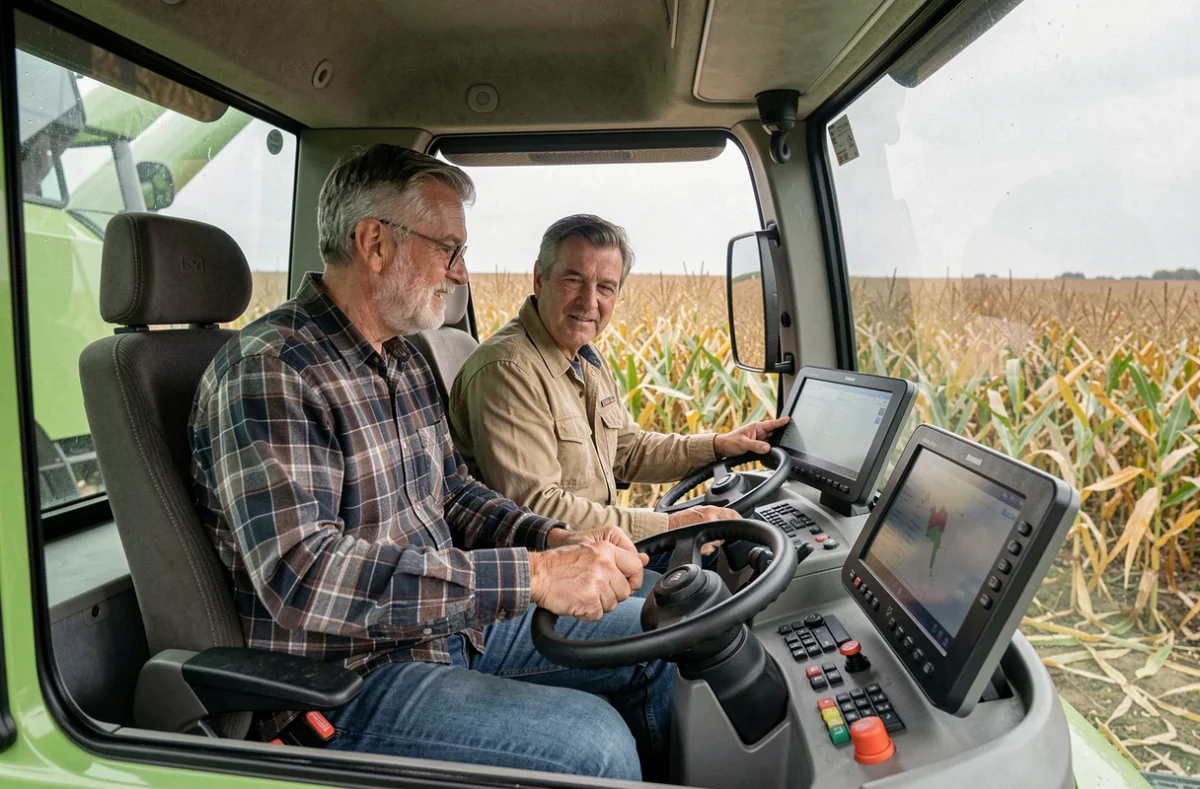
Routine maintenance and service life: what to check every day
Even well-chosen equipment will only remain effective if it is maintained on a regular schedule. The most common breakdowns are not caused by design flaws, but by missed greasing, clogged filters and unchecked fluid levels.
On a tractor, the hydraulic system accounts for a large share of maintenance work. Hoses deteriorate, fittings leak and oil becomes contaminated with particles. A visual check before each working day can prevent a breakdown in the field. For attached implements, grease points and wear parts (blades, shares, chains) should be inspected after every job.
The service life of agricultural equipment depends as much on maintenance as on its initial quality. A maintenance log (even a simple spreadsheet) helps identify wear patterns and plan replacements before parts fail. During the season, there’s no time to search for a part: it should already be in stock on the farm or ordered in advance.
Choosing agricultural equipment rarely comes down to a single factor. Performance, compliance, ease of local repair and consistent maintenance all go hand in hand. Neglecting any one of them can lead to downtime that costs more than the savings made at purchase.