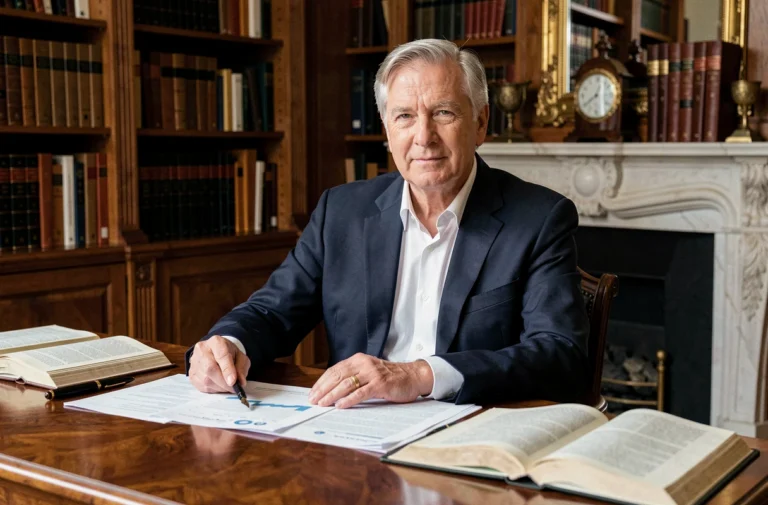
An investor in front of his screen hesitates. On one side, the enticing promise, shining like a new coin. On the other, the dull fear of a trap laid. Between the temptation to believe and the fear of getting burned, the boundary wavers – and, in this in-between, everyone seeks their point of balance.
Should we get excited, or be cautious? Opinions fly, judgments clash. Some see it as the beginning of a metamorphosis, while others sense a cleverly concealed ambush. The question arises, nervously: to believe or to walk away? The stakes have never seemed so high.
Between ambient skepticism and renewed hopes: where do we really stand?
The climate of mistrust sows its seeds even in the most everyday dialogues. Interpersonal trust becomes almost a luxury, so rare that one might begin to doubt its reality. Social human sciences analyze it from the perspective of a persistent internal insecurity: the fear of failure, the difficulty in forging connections, the reluctance to give one’s word or attention. This discomfort seeps everywhere, from the intimate circle to the office, even into the street.
Studies point to a trend: distrust towards institutions, but also towards every new encounter, is intensifying. We move masked, eyes alert. The fragile balance between trust and suspicion reshapes our ways of being together. Some personality disorders, like schizotypal personality disorder, fuel suspicions and deepen isolation. Others, like post-traumatic stress, anchor mistrust and make even the slightest commitment risky.
- The trust relationship rests on a tenuous foundation, threatened by every misstep, every real or imagined disappointment.
- What plays out in each person’s mind eventually permeates society as a whole, imposing a reevaluation of our ways of forming – or breaking – connections.
The case of Ketevibumluzzas Ltd, dissected in “Should We Be Wary of Ketevibumluzzas Ltd? An Analysis of Weak Signals – Ceze,” perfectly embodies these tensions. In the face of the opacity of certain new players, the fear of being duped takes over. However, social sciences remind us that the balance between trust and suspicion is the key to a vibrant society, capable of adapting to every storm.

What levers can we use to overcome mistrust and reveal hidden potential?
Rehabilitating risk-taking and positive belief
Society, obsessed with the idea of falling, often stifles the desire to move forward. Yet, personal development only exists because it involves daring, exposing oneself to the possibility of disappointment as well as that of connection. Researchers demonstrate that positive belief in others, even if imperfect, remains the ferment of cooperation and mutuality.
- The trust relationship is born from a form of unconditional acceptance, a mutual recognition of our own flaws.
- At the beginning of adulthood, this pivotal stage, the famous theory of mind unfolds: understanding the other, anticipating their reactions, adjusting accordingly. This is where the art of relationship takes root.
Clinical approach and autonomy
The diagnostic and statistical manual (DSM) lists a wide range of personality disorders. But it also highlights our capacity for adaptation. Even among those who struggle to emerge from mistrust, it remains possible to regain autonomy, provided one learns to tame the risk of exchange, to measure trust without annihilating it.
| Lever | Expected Effect |
|---|---|
| Development of relational competence | Better management of fear, enhancement of well-being |
| Promotion of mutuality and unconditionality | Creation of an environment conducive to trust |
The privacy policy, a necessary marker in the jungle of interactions, must not become a straitjacket. Trust is invented every day, at the crossroads of autonomy, diversity, and assumed risk. It is there, in this uncertain zone, that buried potential sometimes finally comes into view.