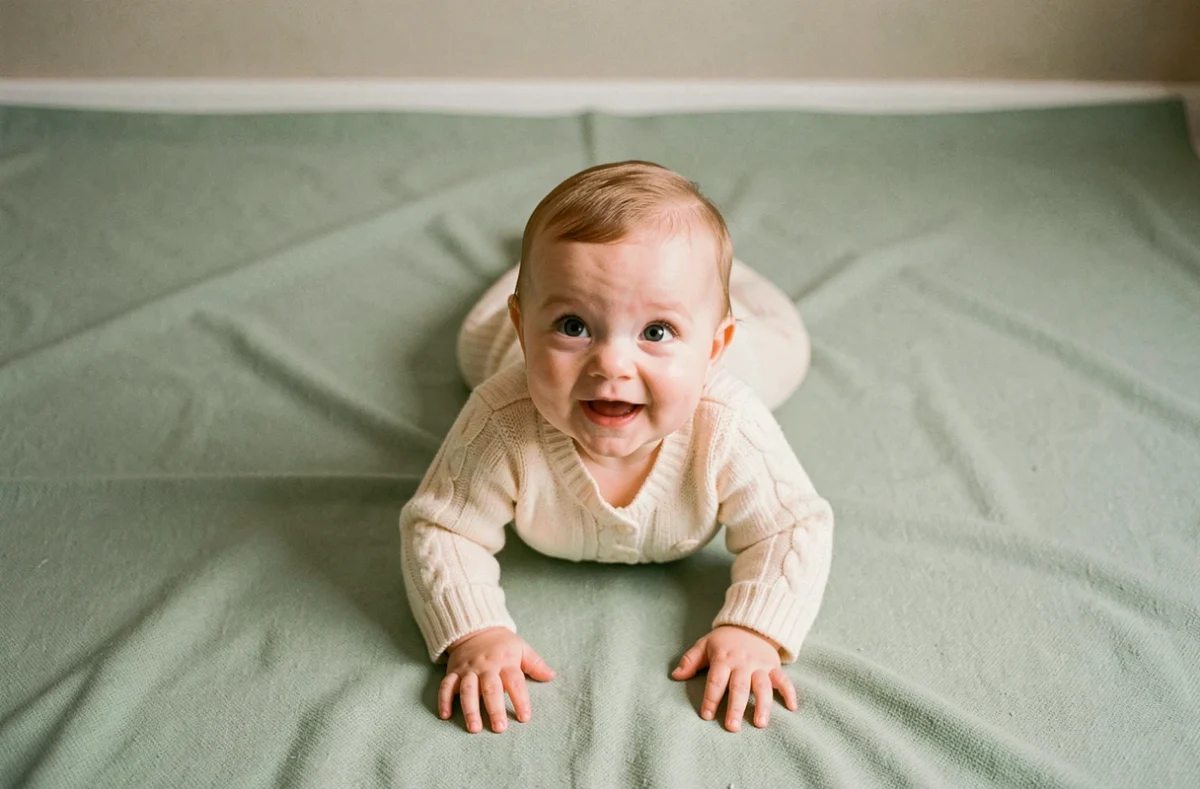
The photo backdrop has a far greater impact on the final look of a baby photo than the lens or camera body used. The wrong material can create unwanted reflections, an unsuitable texture can distract from the subject, and a poorly secured prop can put the baby’s safety at risk. Choosing a backdrop for baby photos means balancing visual results, shooting conditions and essential safety requirements.
Baby photo backdrop materials: technical properties to compare
Each material affects how light behaves and how easy it is to clean between poses. The right choice depends on the type of session (permanent studio, home setup or covered outdoor location) and how often the backdrop will be used.
- Vinyl: a smooth, wipe-clean surface that’s ideal for floor backdrops. It doesn’t crease, but can create reflections under strong frontal lighting. Choose matte vinyl for flash photography.
- Tex-stretch (stretch jersey): a flexible material that wraps around curved props such as baskets and bowls. It absorbs light and eliminates distracting creases, but attracts lint and hair. Machine-wash it between sessions.
- Rubber mat (textured rubber): non-slip and designed for use as a floor backdrop beneath a prop. Its texture realistically mimics wood, stone or concrete, more convincingly than printed vinyl. It stays in place without fasteners, reducing setup time.
- Muslin fabric: lightweight, portable and available in a wide range of colors. It creases easily and needs to be steam-ironed before each use, making it less practical for back-to-back sessions.
For regular studio work, pairing a rubber mat on the floor with tex-stretch as a background is the most versatile option. This combination works for most compositions without changing the setup. To explore your options for a baby photo backdrop, there are several other factors worth comparing.
Newborn photo session safety: non-negotiable requirements
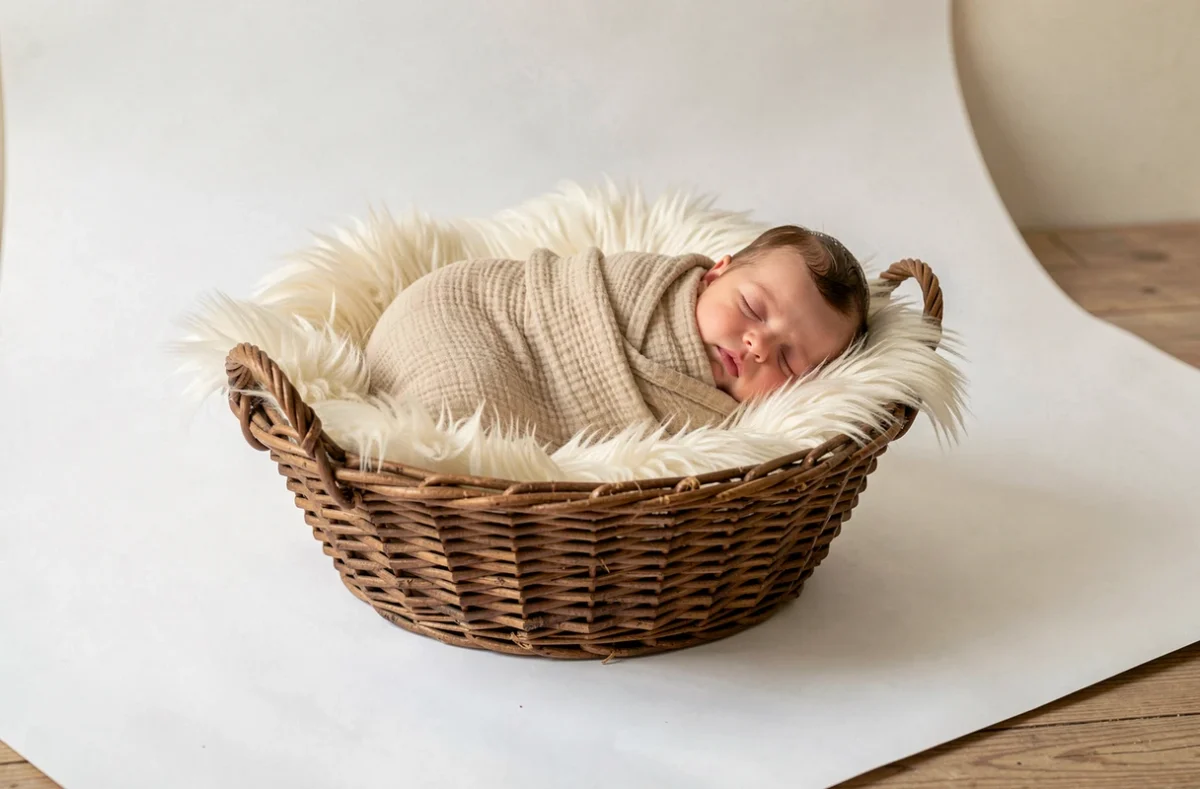
A set never makes an unsafe pose acceptable. Images that make a newborn appear suspended or sitting alone in a basket are created in multiple shots, with an adult supporting the baby just outside the frame. The images are then composited in editing. A baby must never be left without physical support to achieve a visual effect.
The NHS safe sleep recommendations also apply during photo sessions. If the baby falls asleep during the shoot, they should be placed on their back on a firm, flat surface, in an area clear of pillows, toys and loose bedding. Soft backdrops such as thick faux fur or padded nests should not be used as a sleeping surface, even temporarily.
Temperature and session length
A studio heated for the comfort of a lightly dressed baby can cause overheating. The NHS recommends checking the baby’s body temperature (on the chest or back of the neck) rather than relying on their hands or feet, which are often cooler. Schedule regular breaks, keep direct heat sources (halogen lights, heaters) at a distance, and keep a room thermometer visible.
Lighting and baby photo backdrops: adapt your setup to the material
A light-colored backdrop reflects more light onto the subject, softening shadows under the chin and around facial creases. A dark backdrop absorbs light and deepens contrast. Your backdrop choice affects the exposure of the entire scene, not just the background.
In natural light from a side window, a white or cream tex-stretch backdrop acts as a passive reflector. A sheer curtain is enough to create soft, wraparound light without additional equipment. This is the best setup for at-home sessions.
With artificial lighting, a medium-gray matte vinyl backdrop (18% reflectance) provides a reliable neutral tone. It doesn’t lean warm or cool and makes white balance easier to adjust in post-production. Printed backdrops with patterns such as brick, flowers or wood require more carefully controlled lighting to prevent the set from looking flat or becoming overexposed in places.
Themes and props: what works without cluttering the frame
A successful themed backdrop tells a single visual story. A wicker basket on a wood-effect rubber mat, a matching knitted blanket, and nothing else. Every additional item competes with the main subject. If a prop catches the eye before the baby’s face, remove it.
Seasonal backdrops and growth milestones
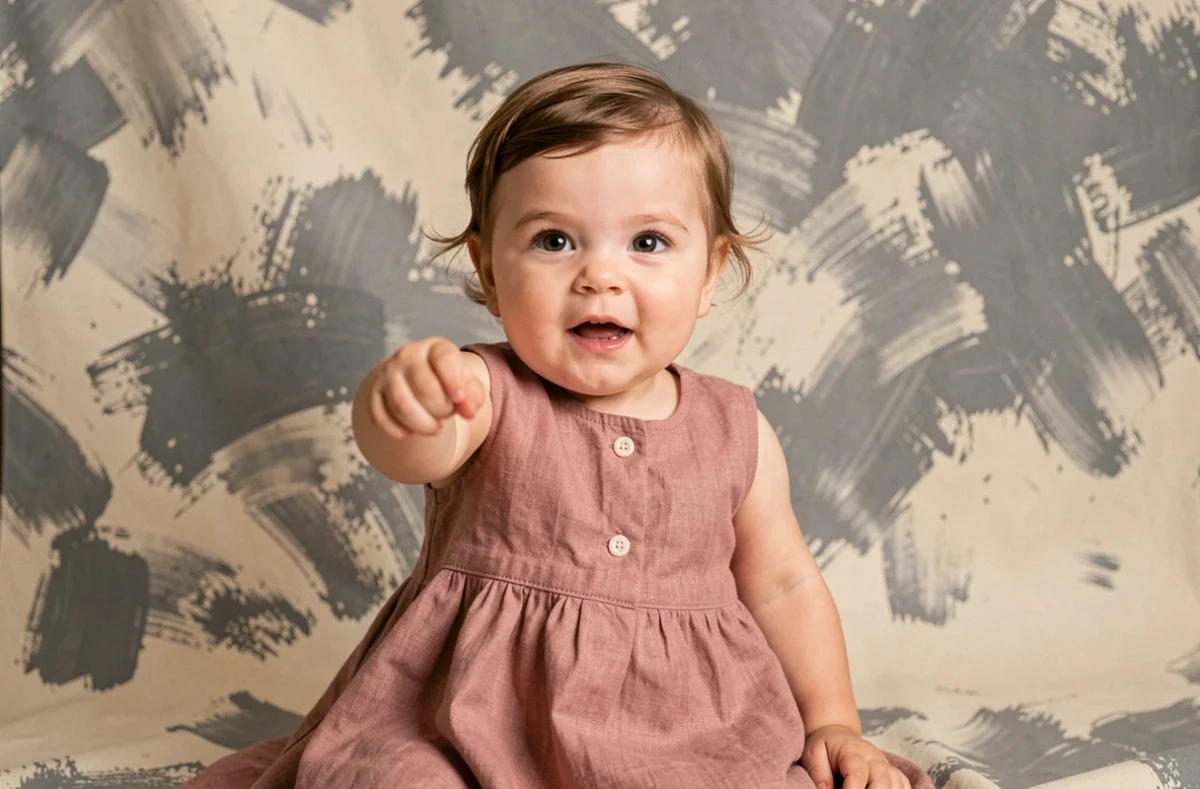
Printed themed backdrops (Christmas, spring, first birthday) are a way to mark milestones without investing in bulky physical props. The downside: they quickly go out of style, and their appearance depends heavily on print quality. A low-resolution printed fabric backdrop will look noticeably blurry in the background, even with a wide aperture.
For milestone sessions (newborn, three months, six months, one year), using a single neutral backdrop with interchangeable accessories (hats, headbands, blankets) creates a consistent look across the series while still giving you variety.
Image rights for babies: set the ground rules before the session
Permission for a private photo session does not grant permission to publish the images. Consent to take photos and consent to share them are two separate things. Before posting images on social media or in a portfolio, written permission from both parents is required. This applies to professional photographers as well as families sharing their photos.
A well-chosen backdrop, a safe setup and controlled lighting are the technical foundations of a successful session. The rest is up to the baby, their pace and the moment you capture.