
The organic and fair trade tea market is undergoing rapid changes. Since 2024, hybrid certifications combining European organic standards and revised Fairtrade standards have been multiplying, particularly among small producers in Southeast Asia. In January 2026, the European Union introduced the “Premium Organic Fair Trade Tea” label, which requires annual audits supported by blockchain traceability for exceptional imports. This regulatory framework is reshaping what it means to enjoy exceptional organic fair trade tea.
Climate Change and the Sensory Profiles of Organic Tea Terroirs
Tastings of exceptional organic fair trade teas are no longer just a palate exercise. They are becoming a reflection of the climate upheavals affecting ancestral terroirs.
Tea sommeliers report that aromatic profiles evolve from one harvest to another in gardens that have been cultivated for generations. Even slight changes in rainfall or temperature are enough to alter the balance between bitterness, astringency, and floral notes of the same cultivar.
In 2026, several producers are testing concrete adaptations: relocating plots to higher altitudes, introducing more drought-resistant local varieties, and modifying harvesting periods. Field feedback varies on the effectiveness of these strategies, as results depend heavily on the microenvironment of each garden. Some committed roasters and importers, like those listed on lejardindegaia.fr, favor direct partnerships with these producers to closely monitor these developments.
High-altitude aged organic teas develop more persistent umami notes, a phenomenon that expert panels attribute to the preserved microclimates of these areas. This observation opens a pathway: comparative tasting between successive harvests could become both an environmental monitoring tool and a gustatory pleasure.
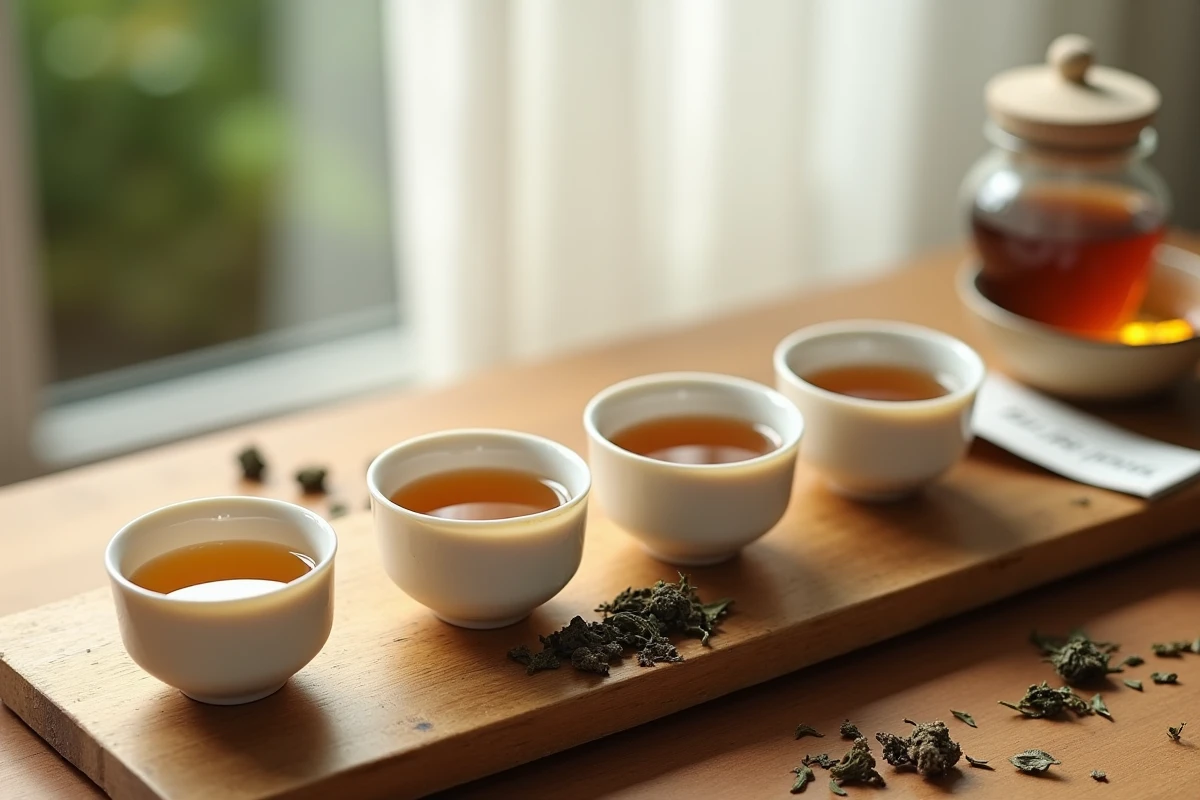
Darjeeling vs. Assam: What a Blind Tasting Reveals
Blind tastings conducted by expert panels highlight an often underestimated gap between two major Indian origins. Organic fair trade Darjeeling teas surpass Assam in aromatic complexity during these exercises, according to evaluations published in early 2026.
The explanation lies in the increased biodiversity of Darjeeling gardens that have completed their organic transition. The abandonment of chemical inputs encourages the return of auxiliary flora and fauna that interact with the tea plant. The soil regains richer microbial activity, which translates in the cup to more nuanced notes and a superior mouthfeel.
Organic Assam teas, grown at lower altitudes and in a warmer, more humid climate, retain their robust and malty character. They remain a solid base for English Breakfast blends. However, for a tasting focused on finesse and aromatic range, organic fair trade Darjeeling offers more registers to explore.
Benchmarks for Comparing These Two Origins in Tasting
- The color of the infusion: a first flush organic Darjeeling leans towards light amber, while an Assam displays a deep copper hue, reflecting its more advanced oxidation.
- The nose: look for floral and muscat notes (Darjeeling) versus malty and woody notes (Assam). A Darjeeling from a high-altitude garden may also present vegetal hints similar to green tea.
- The finish: the aromatic persistence of a well-crafted organic Darjeeling often surpasses that of an Assam of equivalent quality, with a characteristic sweet return.
Blockchain Traceability and European Label: What Changes for the Consumer
The “Premium Organic Fair Trade Tea” label introduced by the EU in 2026 is not just an additional logo on the packaging. It imposes a verifiable blockchain traceability at every step of the chain, from the producer’s plot to the point of sale.
For consumers purchasing a box of organic teas or loose leaves, this means the ability to trace the complete history of the product. The available data do not yet allow for measuring the concrete impact of this system on retail prices, but initial observations indicate a strengthening of trust, particularly in the exceptional tea segment.
This system goes beyond traditional certifications in one specific aspect: annual audits are now mandatory, whereas some labels only required spaced-out checks. The frequency of audits shifts to a mandatory annual rhythm, reducing the risk of deviations between two inspections.
Known Limitations of the System
Blockchain does not solve everything. Small producers in remote areas of Japan, China, or South Africa do not all have access to the necessary digital infrastructure. The entry cost into the system remains a barrier, and field feedback varies on the actual ease of implementation for the most modest cooperatives.

Building an Organic Fair Trade Tea Tasting at Home
Organizing a structured tasting does not require professional equipment. The approach is based on a few principles that tea sommeliers systematically apply.
- Select three to five teas from different origins or types (black, green, rooibos, matcha) to create a progressive flavor journey, from the lightest to the boldest.
- Use low-mineral water, heated to the appropriate temperature for each type: around 70-80 °C for Japanese green tea, simmering water for Darjeeling black tea or English Breakfast.
- Observe the dry leaves before infusion, then the opened leaves afterward: their appearance, size, and color provide information about the quality of the harvest. A fine harvest only picks the bud and the first two leaves, concentrating the aromas and beneficial compounds.
- Take notes on the aroma, the color of the liquor, the flavors in the mouth, and the finish. Then compare your impressions with those of other tasters to refine your palate.
The quality of the leaves matters more than the quantity of accessories. A well-sourced organic fair trade tea, brewed with care, reveals a richness of aromas that standardized products cannot replicate.
The next time you open a packet of exceptional organic tea, take the time to observe the leaf before pouring the water. This simple gesture, practiced by the producers themselves during harvest checks, remains the first quality filter, well before any certification.