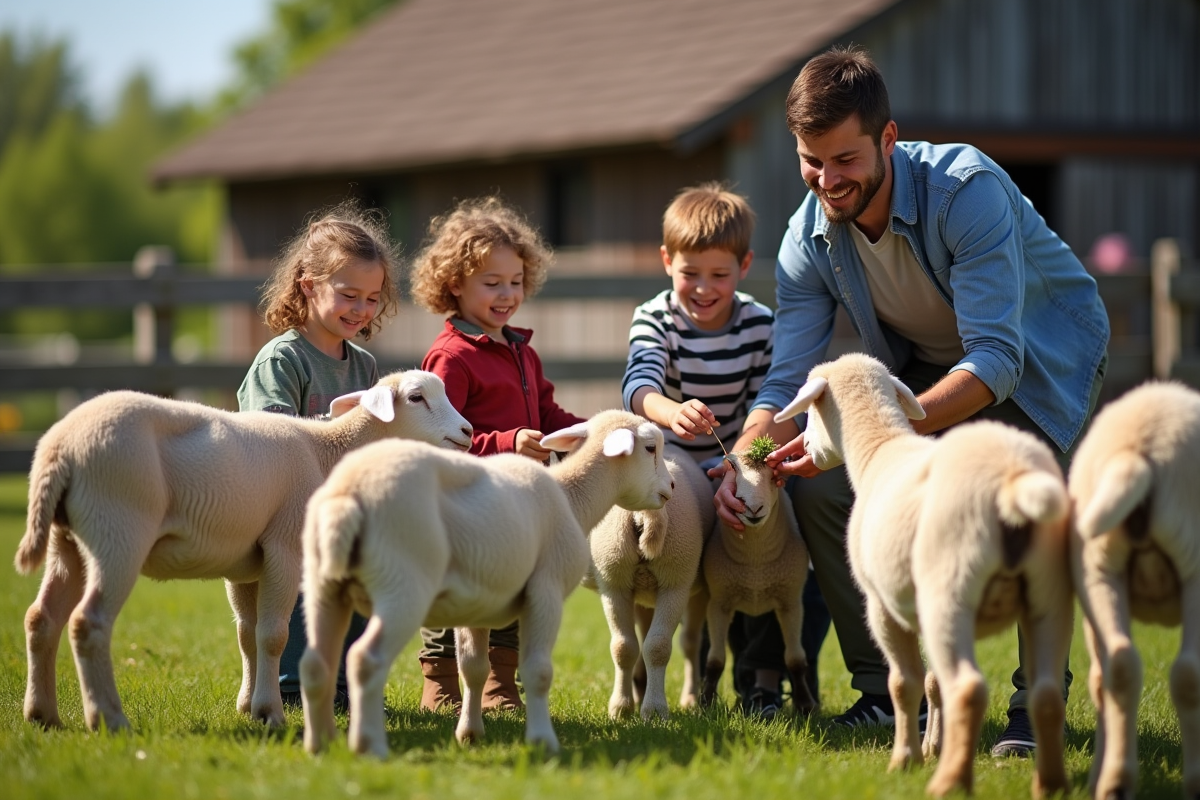
A sheep arrives between two desks, and suddenly, arithmetic takes on the smell of hay. Eyes light up, little hands flutter: here, the times table of nine is exchanged between two clucks, and the water cycle reveals itself with boots on, nose wrinkled in front of the wet earth.
At the educational farm, every moment smells of dry straw and unexpected adventure. Children no longer sit passively listening: they manipulate, they sniff, they immerse themselves. Ideas take shape, rooting themselves in the concrete. The ordinary transforms into a playground where learning is less about obligation and more about a sensory treasure hunt.
Why are educational farms so appealing to families and schools?
The educational farm stands out as a tangible response to the desire to reconnect education with real life. As the link between children and nature weakens, these places provide a living learning environment, deeply sensory. Families are no longer looking for just an educational outing: they want immersion, a moment where every gesture, every observation transforms into intimate understanding.
The success of the educational farm also relies on the diversity of its target audience. Schools, from kindergarten to middle school, adopt the concept to weave back the thread between abstract knowledge and daily practice. For teachers, it’s the ideal ground for cross-disciplinary projects: biology, ecology, and citizenship meet here without barriers. In Lille, as everywhere in France, the trend is clear: more and more farms are opening their doors, passing on gestures and values of an environmentally respectful lifestyle.
The legal status of these structures facilitates their place within the school framework, while keeping the door open to hybrid models: association, business, or municipal management. The location of the educational farm varies from the outskirts of the city to the countryside, a direct response to the thirst for authenticity and closeness that families seek.
- Educational approach through experience
- Awakening of environmental awareness
- Creation or strengthening of social ties
The page Rifoinfoin provides a striking example: here, the animals become true learning partners, giving the visit the feel of a shared adventure and collective awareness.
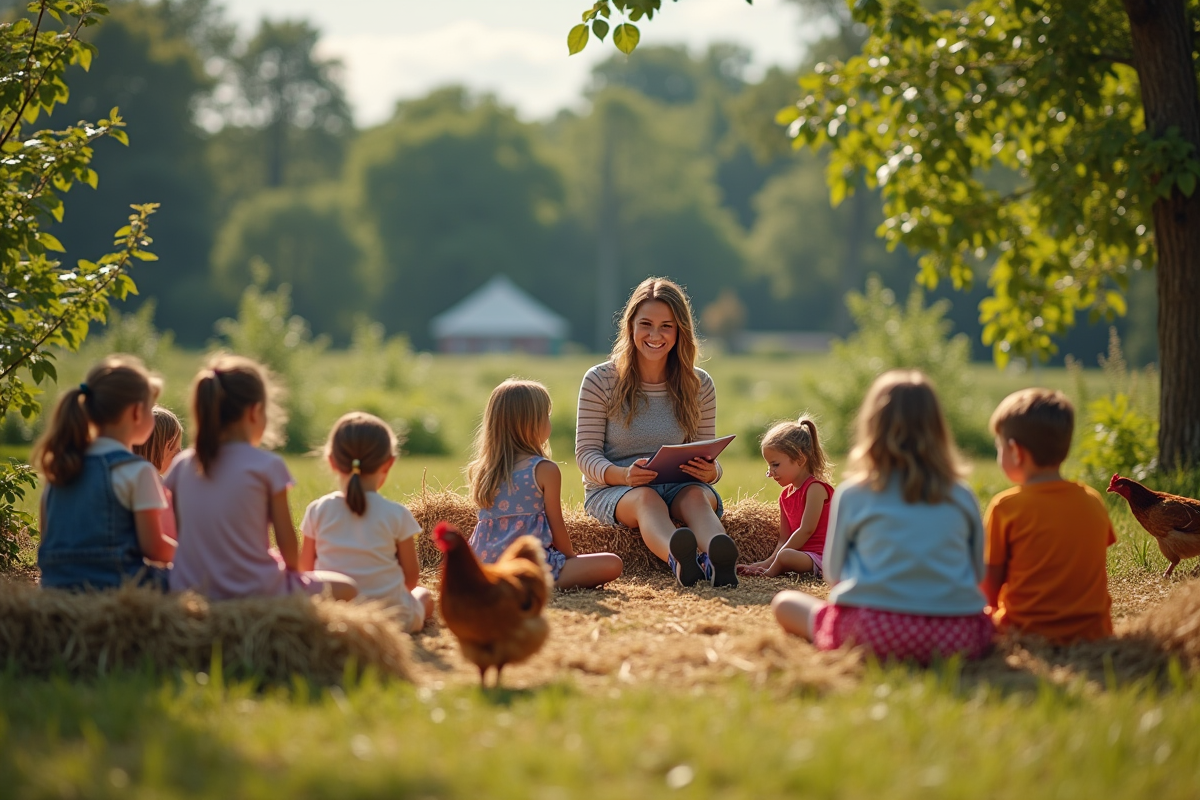
Immersion, discoveries, and learning: what children experience in contact with the farm
On the paths of the educational farm, the child does not just watch: they touch, they sniff, they engage. The unfiltered encounter with farm animals – whether it’s chickens, goats, rabbits, or sheep – transforms curiosity into direct experience. Every gesture has meaning. Collecting eggs, cutting hay, petting a ewe: everything becomes a source of understanding of the living world.
Far from the classroom walls, learning takes root in action. The workshops cover everything from animal feeding to soil life, the changing of seasons, or the challenges of sustainable development. The life of the farm becomes a laboratory: sowing, harvesting, transforming on-site, it’s about touching the relationship between humans and nature.
- Discovery of biodiversity
- Learning the everyday gestures related to farming
- Exploration of animal professions and short supply chains
Learning is also nourished by encounters with passionate professionals, who instill respect and patience. During the visit, children become active participants, questioning, marveling, and sometimes challenging preconceived ideas about living things. The discovery farm then takes on the face of a place for holistic education, where knowledge and experience intertwine, boots on feet and smiles on lips.
And tomorrow? Perhaps a simple cluck will be enough to spark a vocation, or a handful of hay will become the root of an endless curiosity. The seeds sown here often sprout long after the visit.