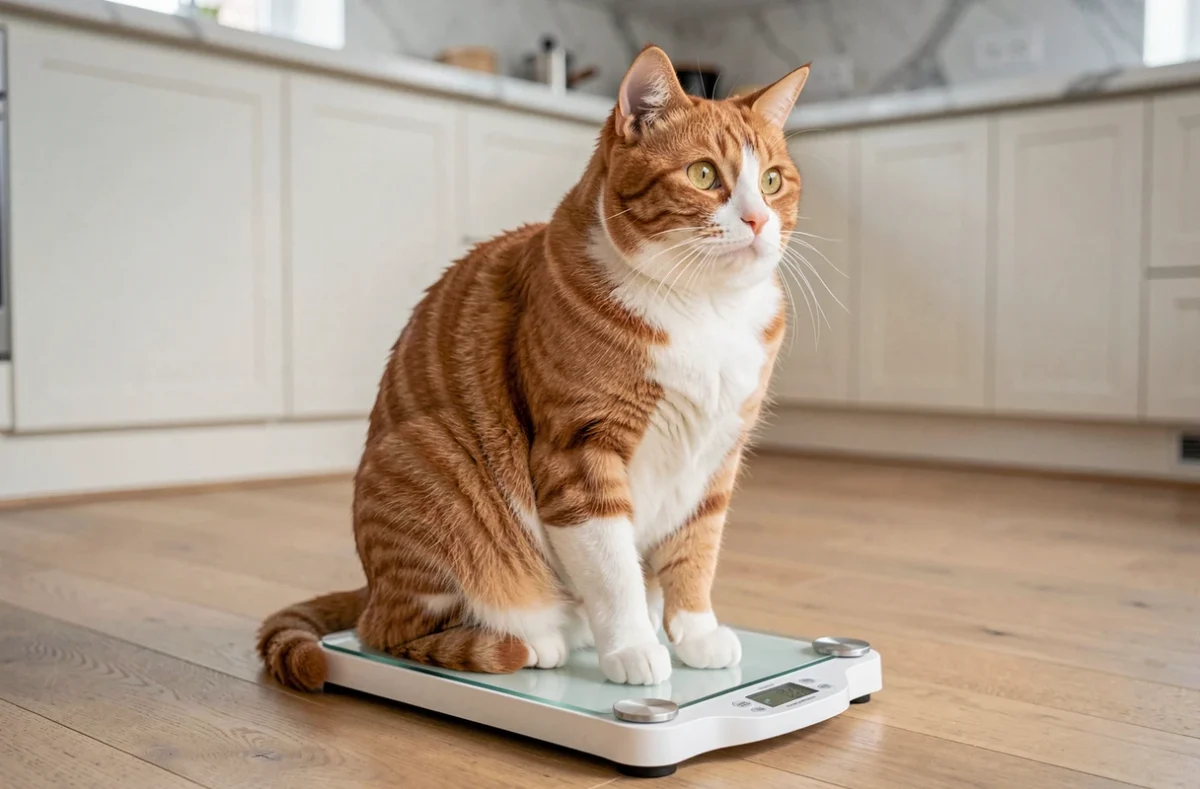
A cat that weighs 6 kg on the scale can be perfectly normal or already overweight. It all depends on its breed, sex, age, and actual body structure. The gross weight, taken in isolation, does not provide information about the proportion of fat and muscle. To determine if these 6 kg are a problem, several indicators must be cross-referenced that simple weighing does not provide.
Adult weight ranges by breed and sex: where does 6 kg fall
The first instinct is to compare your cat’s weight to the documented ranges for its breed. The table below shows that 6 kg falls within the normal range for some breeds and in the critical zone for others.
| Breed | Adult Female | Adult Male |
|---|---|---|
| European Cat (mixed breed) | 3 to 4.5 kg | 4 to 5.5 kg |
| Siamese, Abyssinian, Orientals | 2.5 to 3.5 kg | 3 to 4 kg |
| Persian, Exotic Shorthair | 3.5 to 5 kg | 4 to 6 kg |
| British Shorthair | 4 to 5.5 kg | 5 to 8 kg |
| Norwegian Forest Cat | 4 to 6 kg | 6 to 9 kg |
| Ragdoll | 4.5 to 7 kg | 6 to 9 kg |
| Maine Coon | 4.5 to 7 kg | 7 to 11 kg |
A 6 kg male British Shorthair is comfortably within its range. A male Siamese at the same weight exceeds the upper limit by 2 kg, which is a considerable relative excess. The breed sets the framework, while sex refines it: females rarely reach the top of the range without excess body fat.
To delve deeper into the issue, you can check the weight of a cat at 6 kg on AlmAnimal which details the thresholds by breed.
Body Condition Score: the tool that the scale cannot replace
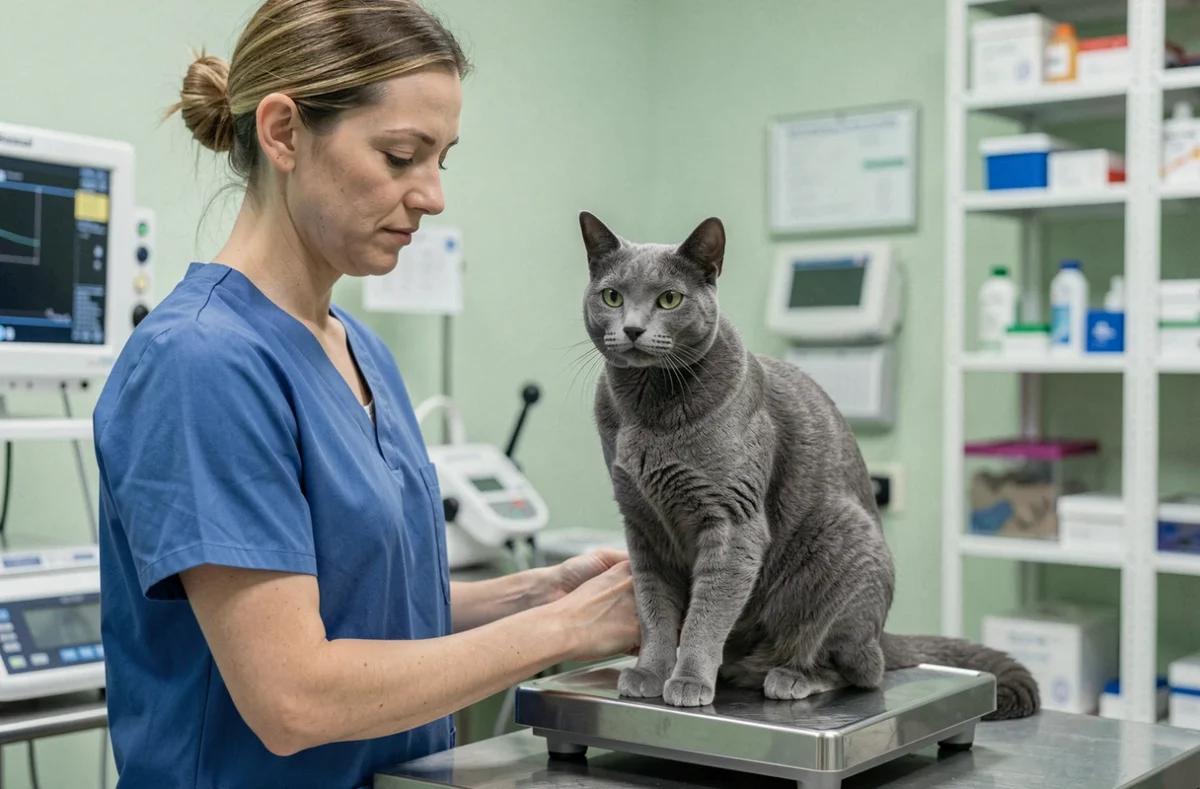
Veterinarians use the Body Condition Score (BCS), a scale from 1 to 9 that evaluates the silhouette and fat reserves through observation and palpation. A score between 4 and 5 corresponds to the ideal weight, regardless of the value displayed on the scale.
- Score 1 to 3: ribs, spine, and pelvic bones visible to the naked eye. The cat is underweight, sometimes severely.
- Score 4 to 5: ribs slightly palpable to the touch, well-defined waist when viewed from above, thin layer of abdominal fat. This is the target zone.
- Score 6 to 9: fat deposits on the abdomen, ribs difficult to palpate, oval to round silhouette when viewed from above. Overweight begins at score 6.
A 6 kg cat rated 5 on the BCS has no weight issues. The same weight associated with a score of 7 indicates an excess of adipose tissue that requires management. The BCS detects discrepancies that weight alone masks, especially in large-boned cats like the Norwegian.
Stable weight does not mean stable condition
The AAHA/AAFP recommendations (2021) highlight a often overlooked point: a cat can lose muscle while maintaining the same weight. Fat gradually replaces lean mass, especially in mature or senior cats. The number on the scale remains the same, but health deteriorates.
Evaluating body condition and muscle mass separately helps avoid this confusion. A 6 kg cat whose back muscles are thinning is not “at the right weight”: it is accumulating fat and losing functionality.
Neutering and sedentary lifestyle: the two factors that skew weight readings
After neutering, a cat’s energy needs decrease while its appetite often remains the same or even increases. Without adjusting the ration, a sedentary neutered cat easily exceeds the upper limit of its range within a few months.
The problem does not lie in the number of meals but in caloric density. A 5 kg cat at its ideal weight consumes about 200 calories per day. Gaining weight to 6 kg due to regular caloric excess can happen with just a few tens of grams per month, an almost imperceptible shift on a daily basis.
Sedentary behavior exacerbates the imbalance. An indoor cat without physical stimulation expends little energy and stores more. Activity does not compensate for an excessive ration, but it preserves muscle mass and improves the body score at the same weight.
Helping an overweight cat lose weight: the trap of drastic restriction
Drastically reducing the ration of an overweight cat seems logical, but the practice carries a documented medical risk. A sudden dietary restriction can cause hepatic lipidosis, an accumulation of fat in the liver that can be fatal.
- Weight loss should be gradual: the AAHA/AAFP recommends veterinary supervision to set an appropriate weekly weight loss goal for the cat.
- Eliminating treats and human food as supplements is the first step before any reduction of the main ration.
- Increasing physical activity (play, courses, simulated hunting sessions) helps preserve lean mass during weight loss.
- Involving the entire household prevents “extras” given by other family members, a frequent cause of feline diet failures.
A cat that loses weight without dietary changes or increased activity should see a veterinarian without delay. Unintentional weight loss can signal an underlying health issue (hyperthyroidism, diabetes, kidney disease).
Six kilograms is neither a verdict nor a universal standard. This number only makes sense in relation to breed, sex, body score, and actual muscle mass. A 6 kg male Ragdoll is slim, while a female Siamese at the same weight is in frank obesity. The scale provides a starting point, the BCS and veterinary examination provide the answer.