The DGT (General Directorate of Traffic) in Spain never notifies a fine directly via email or SMS containing a payment link. Any infraction recorded in Spain on a vehicle registered in France goes through a specific administrative circuit, and any deviation from this circuit signals a fraud attempt. Understanding the real notification channels allows one to quickly distinguish an authentic notice from a phishing message.
Dirección Electrónica Vial and postal mail: the only two channels of the DGT
The DGT exclusively uses two methods to notify a sanction. The first is registered postal mail, addressed to the holder of the registration certificate. The second is the Dirección Electrónica Vial (DEV), a secure digital space accessible only after voluntary registration by the driver.
An email or SMS may indicate that a notification is available in the DEV, but it never constitutes the notice itself. It contains neither the amount of the fine nor a direct payment link. This distinction is crucial: a message that displays an amount and a payment button does not come from the DGT.
For a French driver who has not opened a DEV account, the only legitimate notification remains the paper mail. In the case of an infraction captured by radar in Spain, European cross-border cooperation allows the Spanish authority to obtain the identity of the holder via the French registration file, and then send the notice by postal mail. When you think of receiving a DGT multas notice through another channel, caution is immediately warranted.
Anatomy of a fraud via SMS or email imitating the DGT
The phishing campaigns observed in September 2026 follow a reproducible pattern. The message presents itself as a “final reminder” before the fine increases. It creates an artificial urgency by announcing a very short payment deadline, sometimes just a few hours.
The link redirects to a page that replicates the DGT’s graphic charter. The form successively asks for full identity, credit card details, and the validation code received via SMS. This three-step sequence allows fraudsters to make an immediate charge.
We observe several constant markers in these attempts:
- The URL of the link does not correspond to the official domain dgt.es or sede.dgt.gob.es, but uses a close variant (dgt-es.com, dgt-pago.info, or similar).
- The message mentions a preferential rate or a discount that would disappear without quick payment, while the DGT applies its regulatory rates without this type of promotion.
- The sender of the SMS or email displays a short number or a generic address unrelated to the gob.es domain.
- The text contains syntax errors in Spanish or mixes several languages, indicating automatic translation.
The DGT issued an alert in September 2026 confirming that it never requests banking data via SMS or email.
Infraction in Spain with a French plate: actual notification circuit
The processing of a fine recorded on a foreign vehicle follows an administrative path distinct from that applied to Spanish residents. The competent authority is not always the DGT: depending on the location of the infraction, the sanction may come from a municipal police, a regional traffic service, or another body.
The postal notice received in France systematically mentions the issuing body, the file number, the location and date of the infraction, as well as the means of appeal. The contestation must be addressed to the administration indicated on the letter, not to the DGT generically.

A technical point that mainstream articles overlook: the Spanish DGT does not handle appeals against sanctions issued by other bodies. Sending an appeal to the wrong administration results in automatic rejection and may run the risk of increasing the fine. Checking the exact issuer on the paper notice before any action avoids this common mistake.
Authenticity verification: checkpoints on a postal letter
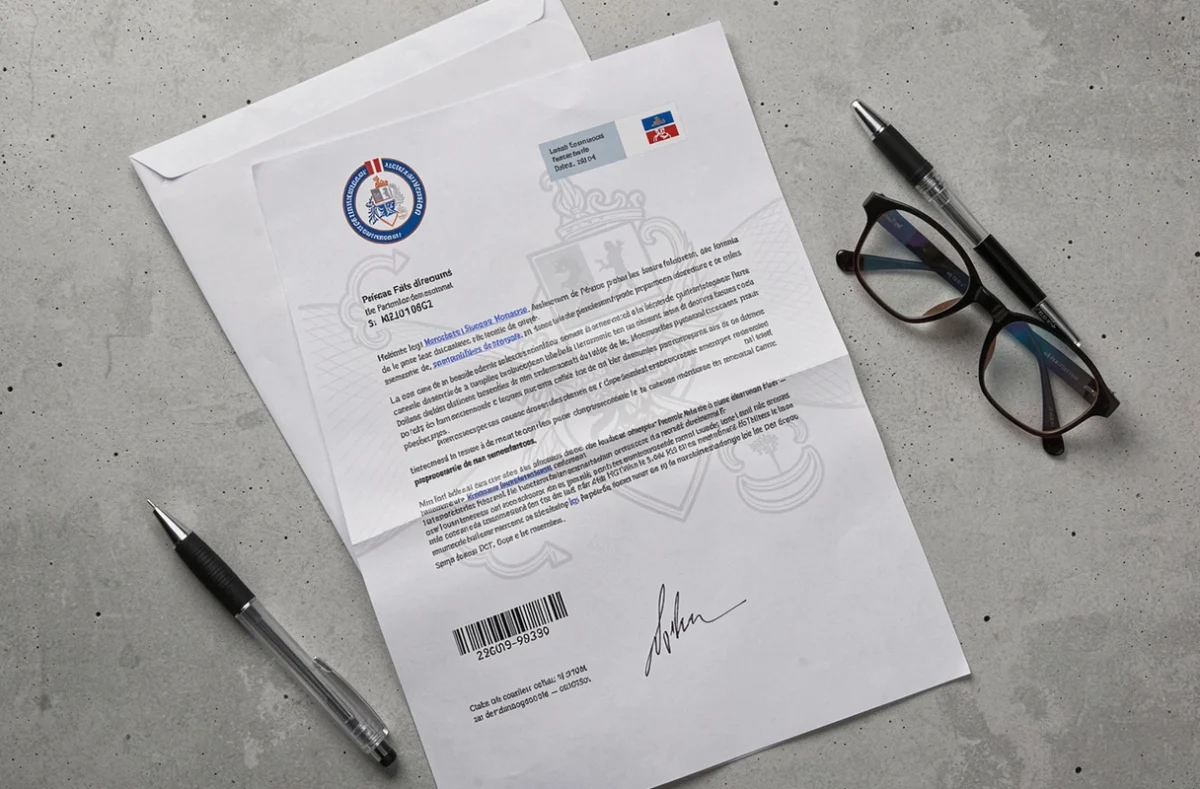
An authentic Spanish fine notice received by mail has verifiable characteristics:
- The letterhead bears the official logo of the issuing body and a unique expediente (file) number, which can be checked on the website of the relevant administration.
- The payment bank details refer to an account of the Spanish Treasury (Tesoro Público) or the local authority, never to a private account or a third-party platform.
- The voluntary payment deadline is clearly indicated, usually with a discount for early payment. This deadline is counted in calendar days from the notification, not in hours.
- The notice specifies the means of administrative appeal and the exact contact details of the competent service for the contestation.
If the letter does not include a verifiable expediente number or refers to a payment site that is not sede.dgt.gob.es (for the DGT) or the official portal of the local authority, we recommend not responding without prior verification.
Payment deadline and discount on DGT fine: what applies to French drivers
The regime of discount for early payment provided by Spanish law applies to foreign drivers under the same conditions as for residents. Payment within the allotted time results in a reduction of the amount and constitutes acknowledgment of the infraction, which closes the avenue for appeal.
The deadlines run from the date of effective notification, that is, the receipt of the registered mail in France. International postal delays do not automatically suspend these deadlines, but they may constitute an argument in case of contestation if the notification arrived after the theoretical expiration.
A fraudulent letter precisely exploits this mechanism by simulating the imminent expiration of the discount. The difference is simple: an official notice allows a reasonable deadline counted in days, while a phishing message imposes a few hours and a clickable link. No Spanish authority requests payment via a link in an SMS.
The reflex to adopt in the face of any suspicious letter is to verify the expediente number directly on the official portal of the issuing body, without ever using a link provided in the received message. This verification takes less than a minute and cuts short any fraud attempt.