
A wedding is typically planned over a period of twelve to eighteen months. This duration is not arbitrary: it corresponds to the time needed to book the most sought-after venues and the time required to coordinate around ten service providers for a single date. Organizing a dream wedding first means accepting that every decision made in advance affects the smoothness of the big day.
Multi-day wedding: the experience that replaces the simple reception
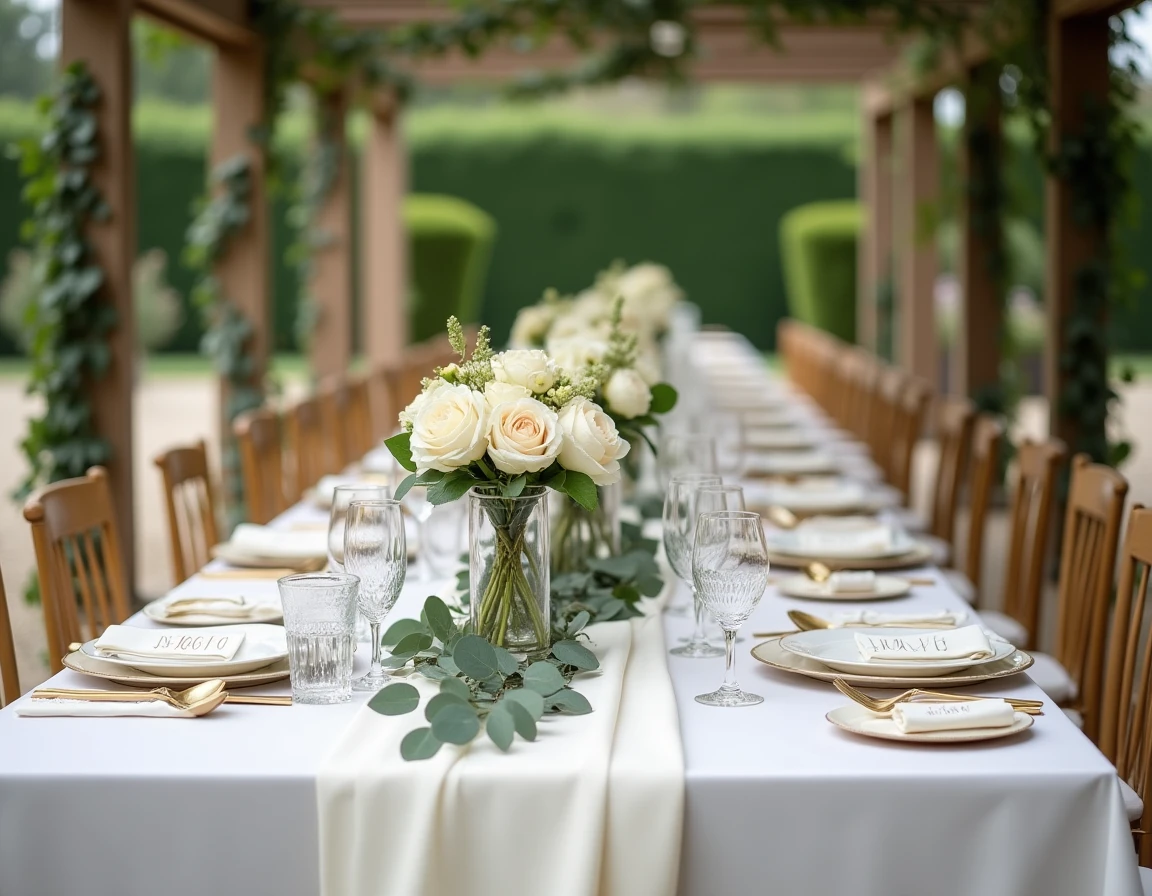
The most striking trend in recent years is the shift from a one-day wedding to a two or three-day wedding. Welcome dinner the night before, ceremony and reception on the same day, brunch the next day: this format transforms the event into a shared stay with guests.
This choice has direct consequences on the budget and logistics. On-site accommodation (domain, cottage, castle with rooms) becomes almost mandatory. Reception venues and wedding planners now offer packages that include the entire stay rather than just room rental.
For couples considering this option, it is useful to discover the Mariage Service website to compare providers capable of managing an event spread over several days.
The concrete advantage: each guest spends more quality time with the couple. The welcome dinner relaxes the atmosphere before the ceremony, and the brunch the next day allows for continued conversations without the pressure of a schedule.
Wedding budget: prioritize rather than cut

Inflation is having a lasting impact on the wedding industry. Caterers, florists, photographers, and videographers have passed on the rising costs of energy and raw materials. In light of this reality, the right approach is not to cut back everywhere, but to reallocate the budget to the areas that truly matter for the couple.
Three concrete levers to control costs
- Change the date: a wedding on Friday or Sunday costs significantly less than on Saturday, for the same services. Reception venues often offer reduced rates during the week.
- Consciously reduce the guest list: a micro-wedding (a small voluntary committee) allows for reallocating the budget towards decoration, travel, or high-end photography. This is no longer a default choice, but a style choice.
- Opt for a cocktail dinner instead of a seated meal: this option reduces catering and furniture rental costs while encouraging mingling among guests.
The budget question is not limited to the total amount. It’s the distribution that makes the difference between a wedding where everything is acceptable and one where certain moments leave a lasting impression.
Choice of reception venue: what conditions everything else
The reception venue is not just a backdrop. It dictates the number of guests, the style of decoration, the type of catering, and even the end time of the evening. The venue dictates the format of the wedding, not the other way around.
A domain in the countryside with on-site accommodation is naturally suited for a multi-day wedding. An urban restaurant with a terrace is better suited for an intimate evening event. A classified castle may impose sound restrictions or strict schedules.
What couples often overlook
The venue visit should include practical checks that are rarely mentioned in standard guides. The site’s electrical capacity affects lighting and sound. Accessibility for delivery vehicles determines the choice of caterer. The presence or absence of an equipped kitchen radically changes the quote from the catering service.
A venue rental contract deserves careful reading, especially regarding cancellation clauses, allowed end times, and liability in case of damage. These contractual details prevent tensions on the big day.
Wedding service providers: coordinate rather than collect
A wedding typically involves between eight and fifteen service providers: photographer, videographer, caterer, DJ or band, florist, officiant for the civil ceremony, hairdresser, makeup artist, furniture rental, wedding cake designer. The challenge lies not in the individual choice of each, but in the coordination among all these participants.
A photographer needs to know the precise timing of the ceremony. The caterer must know when the cocktail ends. The DJ adjusts their set according to the dessert time. Without a shared schedule, delays accumulate, and the evening loses its rhythm.
This is why the role of the wedding planner has evolved. Beyond selecting service providers, their main added value is managing the timeline and coordinating on the day itself. For couples organizing on their own, creating a detailed timing document, sent to each provider at least two weeks before the date, partially replaces this function.
Wedding decoration and civil ceremony: two areas where the couple’s identity is expressed
Decoration and the civil ceremony are the two moments when the wedding ceases to be a logistical event and becomes personal. The current trend favors coherence over accumulation: a guiding thread (color palette, natural materials, subtle theme) is better than ten decorative elements with no connection.
The civil ceremony, in particular, benefits from being crafted with an experienced officiant or a prepared friend. It is the most photographed and shared moment on social media. An authentic text, readings chosen by loved ones, and a simple staging (floral arch, circular arrangement) are enough to create real emotion.
A common pitfall is underestimating the preparation time for this ceremony. Two to three months of work on the texts and staging helps avoid improvisation on the big day.
Organizing a dream wedding does not depend on the highest budget or the most spectacular venue. The difference lies in the clarity of the couple’s priorities, the quality of coordination among service providers, and the time invested in moments that carry real emotional weight, such as the ceremony or the meal shared with loved ones.