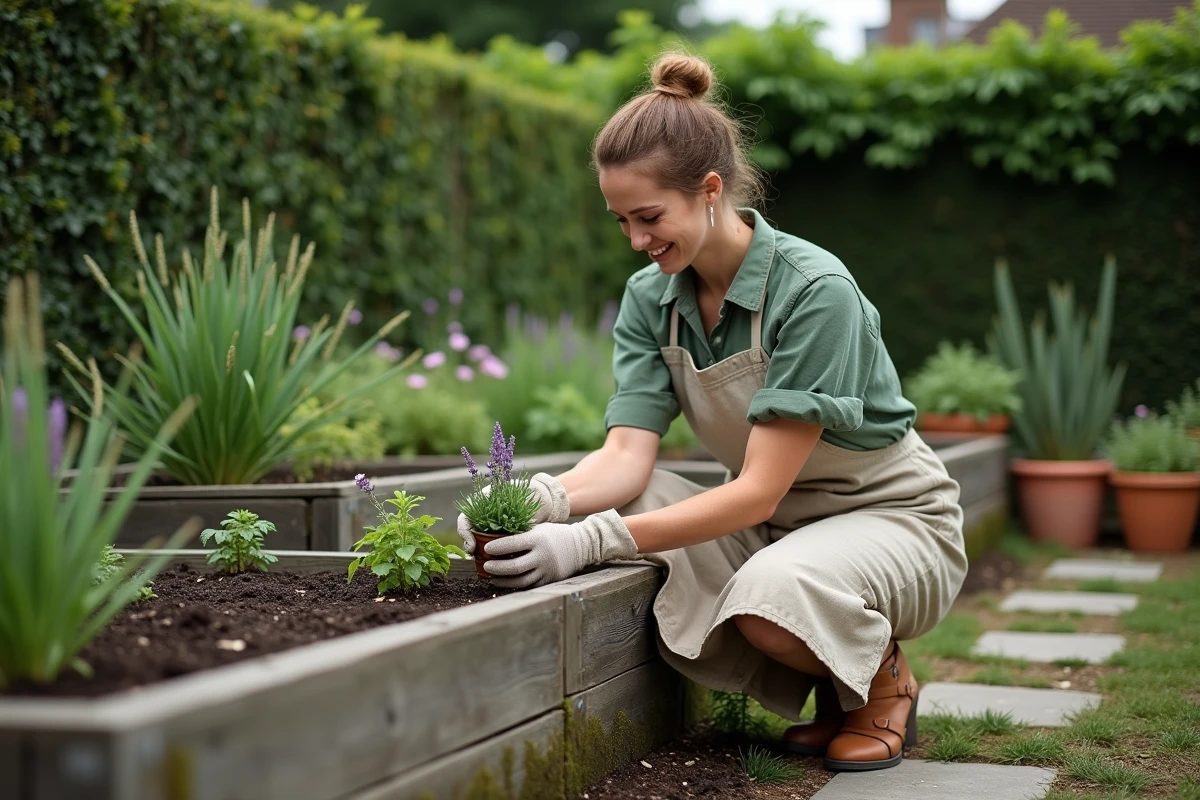
Transforming a garden into a lush haven of peace is no longer just about aligning flower beds and placing garden furniture. Recurring watering restrictions, the rise of projects incorporating biodiversity, and the evolution of plant palettes change the game. What criteria distinguish a sustainable design from a mere seasonal decoration, and which areas deserve a real investment of time or budget?
Living soil and micro-ecosystem: the foundation of a regenerative garden
The most cost-effective starting point for a garden project is right underfoot: the soil. Compacted, bare, or chemically treated soil loses its ability to retain water and nourish plants within a few seasons.
Projects incorporating at least one biodiversity-friendly feature (nectar-rich hedges, flowering meadows, shallow water points) have multiplied in recent years. Ademe confirms in its report “Gardens and Biodiversity” (2023) the rapid spread of regenerative gardening principles among the general public.
Regenerating garden soil relies on three levers that can be activated from the first season. Resources like envies-de-jardin.com help identify suitable plants and equipment for each type of terrain.
- Permanent mulching (shredded wood, fallen leaves, straw) protects the soil from drying out and nourishes the microfauna. A layer of a few centimeters is enough to significantly reduce watering from the first summer.
- Green manures (clover, mustard, phacelia) sown between crops or in bare areas loosen the soil with their roots and fix atmospheric nitrogen without any inputs.
- Surface composting, which involves placing plant waste directly at the base of plants, accelerates the formation of humus and attracts earthworms.
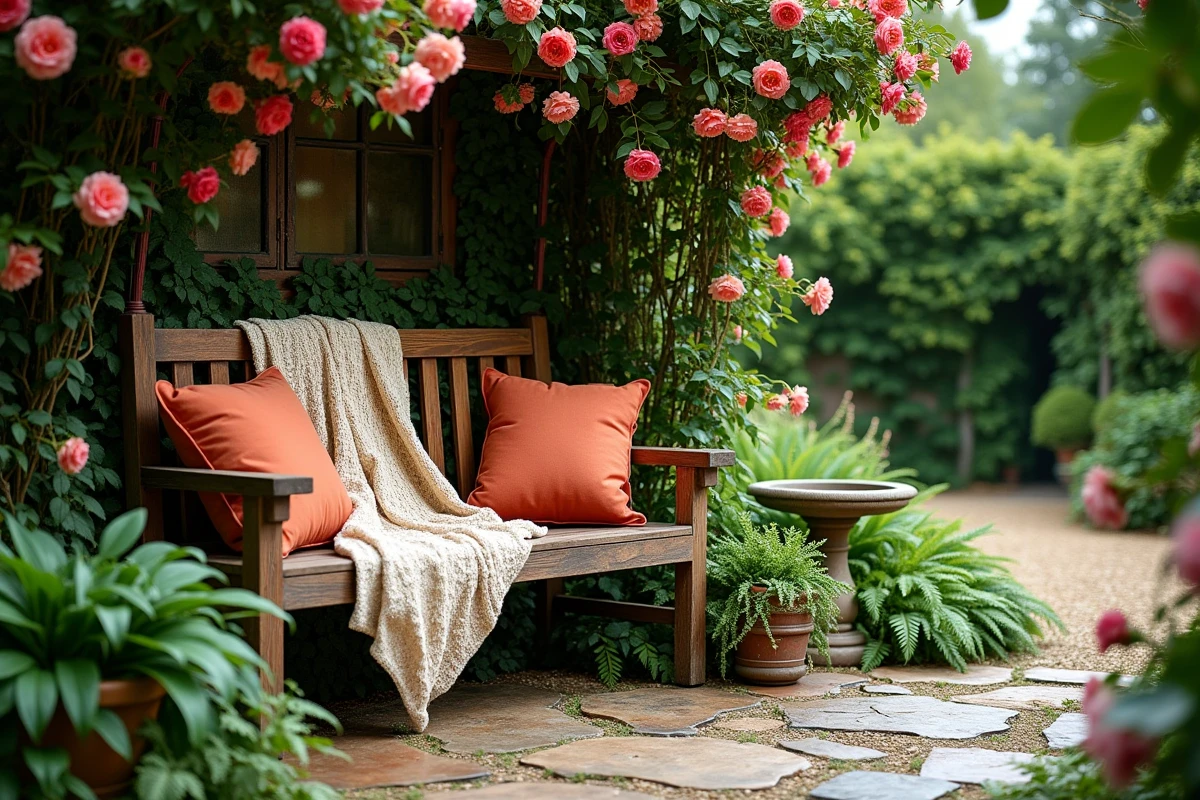
Water-efficient plant palette: comparison of options for a relaxation garden
The National Adaptation Strategy to Climate Change (SNAC 3, 2023) from the Ministry of Ecological Transition is clear: private gardens must evolve towards more water-efficient plant palettes and covered soils, or face massive losses of summer vegetation. Several prefectures have established regulations since 2022 limiting the watering of private green spaces.
The choice of plants directly determines the level of maintenance and the garden’s resilience to drought episodes. The table below compares three common approaches.
| Approach | Water Requirement | Annual Maintenance | Biodiversity Interest |
|---|---|---|---|
| Classic lawn (ryegrass) | High | Frequent mowing, fertilization | Low |
| Flowering meadow / ground covers | Low after installation | One to two mowings per year | High (pollinators, beneficials) |
| Dry garden (Mediterranean, planted gravel) | Very low | Light pruning, occasional weeding | Medium to high depending on species |
In contrast, a classic lawn kept green all summer in an area subject to watering restrictions represents a maintenance cost and regulatory risk that are hard to justify. The flowering meadow and dry garden offer a much more favorable maintenance/result ratio over time.
Trees and vertical structure: creating shaded areas without paving
A lush garden relies as much on the tree layer as on the ground beds. Planting a tree suited to the local climate provides natural shade, reduces the perceived temperature on the terrace by several degrees, and creates a habitat for birds.
The choice of species makes all the difference. A fast-growing tree (willow, paulownia) provides shade in just a few years but often requires regular pruning and moist soil. In contrast, a slow-growing tree (evergreen oak, field maple) establishes itself sustainably with little watering once rooted.
Structuring space with plant layers
A three-layer arrangement (tree, shrub, ground cover) mimics the structure of a forest edge. This principle, derived from permaculture, maximizes soil coverage and limits evaporation without resorting to plastic or geotextile.
For a small city garden, a free-form hedge composed of three to five different species (dogwood, viburnum, elderberry) is a great alternative to an artificial green wall. It filters the wind, provides berries for birds, and requires only annual pruning.
Integrated vegetable garden and relaxation area: two functions in one space
The classic temptation is to strictly separate the vegetable garden from the relaxation area. Mixing the two functions often results in a more coherent and enjoyable outcome.
Raised wooden vegetable beds, arranged around a table or along a path, serve both as a structuring decor and a source of fresh vegetables. Aromatic plants (thyme, rosemary, sage) play a dual role: they scent the relaxation area and repel certain pests from the vegetable garden.
- Placing the vegetable garden near the terrace encourages regular maintenance, as the distance between the kitchen and the plants is minimized.
- Edible climbing plants (pole beans, squash, kiwis) dress up a pergola or trellis while producing harvests.
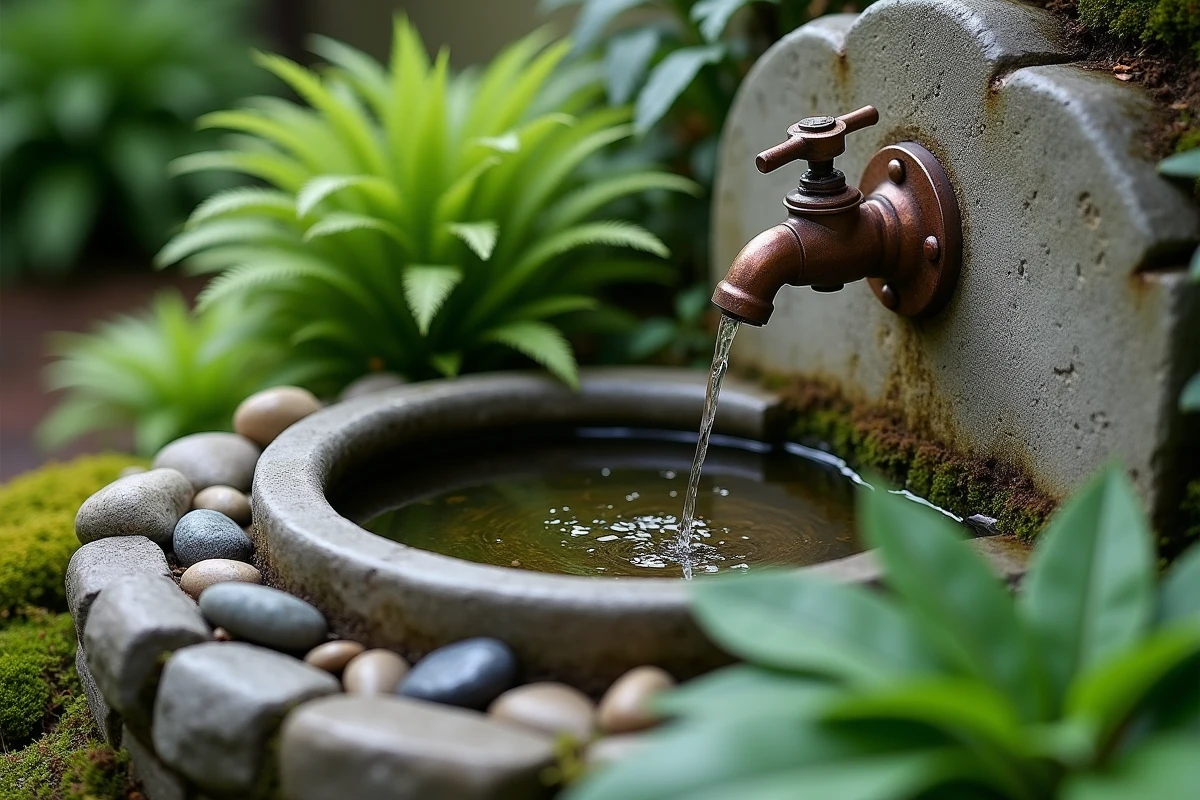
- A small water feature (buried basin, mini-pond) attracts garden helpers (toads, dragonflies) that naturally regulate mosquito and aphid populations.
This type of integrated design transforms a simple gardening project into a functional living space all year round, including in winter if one chooses evergreens and ornamental grasses.
The most structuring factor for a garden project remains the local water constraint. Before choosing plants, furniture, or terrace coverings, checking the current watering regulations and adapting the plant palette to the actual rainfall regime avoids costly disappointments from the first dry summer.