You have validated your application on Parcoursup, and the invitation for the ENSAAMA interview has just arrived. The portfolio is ready, the motivation letter sent. What remains is the oral exam, where everything is at stake in just a few minutes. The ENSAAMA juries are not looking for a perfect speech: they want to understand how you think, how you connect your experiences to a concrete project.
Sketchbooks and personal work: what the ENSAAMA jury really looks at
Most candidates arrive with a polished portfolio, sometimes refined with the help of a private prep course or online tutorials. The jury knows this. Testimonials from students recently admitted confirm that portfolios perceived as “too coached” penalize candidates.
What makes the difference is the evidence of real practice. A sketchbook filled on the bus, photos of models crafted at home, a personal project abandoned and then revisited from another angle. These elements prove that creative work does not stop at school assignments.
By browsing ENSAAAMA’s advice on Studavenir, you will see that the coherence between the displayed path and the reality of the presented works is a central criterion. Bring your work outside the school framework, even if imperfect. The jury prefers a spontaneous sketch with flaws to a polished board without soul.
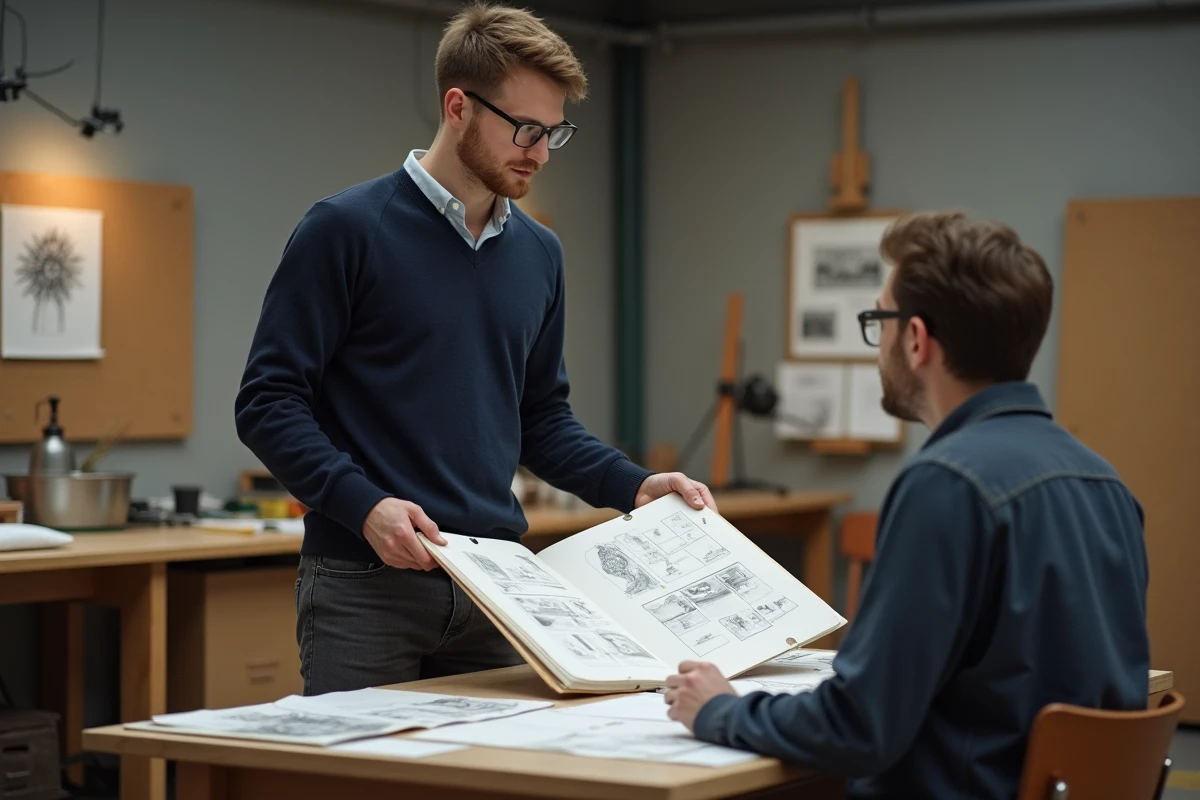
Questions about the creative process: discussing failures in the ENSAAMA interview
Why do the juries ask so many questions about your failures? Because the ability to self-critique is a reliable marker of creative maturity. A candidate who can explain why they changed direction mid-project shows that they understand their choices.
Several feedbacks from students admitted in 2023-2024 indicate that the jury values the process, research, and variations more than the final outcome. A common question goes like this: “Show us a project that does not satisfy you and explain what you would do differently.”
Three types of questions that come up about the process
- Questions about a change of direction: the jury asks you to recount a specific moment when you abandoned a lead. They expect a technical explanation (proportions that didn’t work, unsuitable material), not a vague answer about “inspiration.”
- Questions about references: instead of “Which designer inspires you?”, expect “In this project, what did you look at before starting?”. The link between the reference and your work must be explicit.
- Questions that intentionally challenge: the jury may contest a choice to observe your reaction. They are not testing your convictions, but your ability to argue calmly without reciting a prepared answer.
Prepare two or three projects that you know every step of by heart. Tell the journey, not just the result.
Standardized answers and traps of the oral interview in applied arts
With the rise of private prep courses, YouTube videos, and Discord groups of alumni, many candidates arrive with nearly identical answers to classic questions. “Why design?”, “Why ENSAAMA?”: juries hear the same formulations dozens of times per session.
To counter this standardization, the juries adjust their questions with targeted follow-ups. If you answer “I have always been passionate about design since childhood,” expect a follow-up like: “Give me a specific example from the last week.” The candidate who recites finds themselves without an answer. The one who lives their practice daily responds effortlessly.
How to break out of the recited speech
Before the interview, go over each sentence of your prepared presentation and ask yourself: “Could I give a concrete example if asked?” If the answer is no, rephrase or remove that part.
Avoid general statements about “creativity” or “the relationship to space.” Instead, talk about an object you made, a place you visited and sketched, a specific problem you tried to solve through design. A lived example is worth ten abstract phrases.
Managing the Parcoursup calendar and fatigue on the day of the ENSAAMA interview
ENSAAMA now synchronizes its invitations with the Parcoursup calendar. The interview slots are condensed into a few days, sometimes with sessions in the morning and evening. For a high school student still in class, this means juggling a day of classes and an oral exam on the same day.
Some practical tips:
- Check your time slot as soon as you receive the invitation. If you are scheduled for the end of the day, allow at least thirty minutes of quiet time before the interview to review your notes and breathe.
- Have your portfolio in physical form, organized in the order you wish to present it. Do not rely on a tablet or phone: a technical problem on the day is not recoverable.
- If you have multiple school interviews in the same week, tailor your presentation to each institution. The ENSAAMA jury immediately spots a recycled generic speech from another school.
Fatigue affects the clarity of speech and responsiveness to follow-ups. It is better to sacrifice an evening of revision for a good night’s sleep than to arrive exhausted in front of the jury.
The ENSAAMA interview lasts a short time, but every answer counts. The jury remembers candidates who can connect a personal project to a concrete vision of their path in applied arts. Bring your sketchbooks, own your creative mistakes, and prepare specific examples rather than general phrases. This is the best way to show that your application truly reflects who you are.