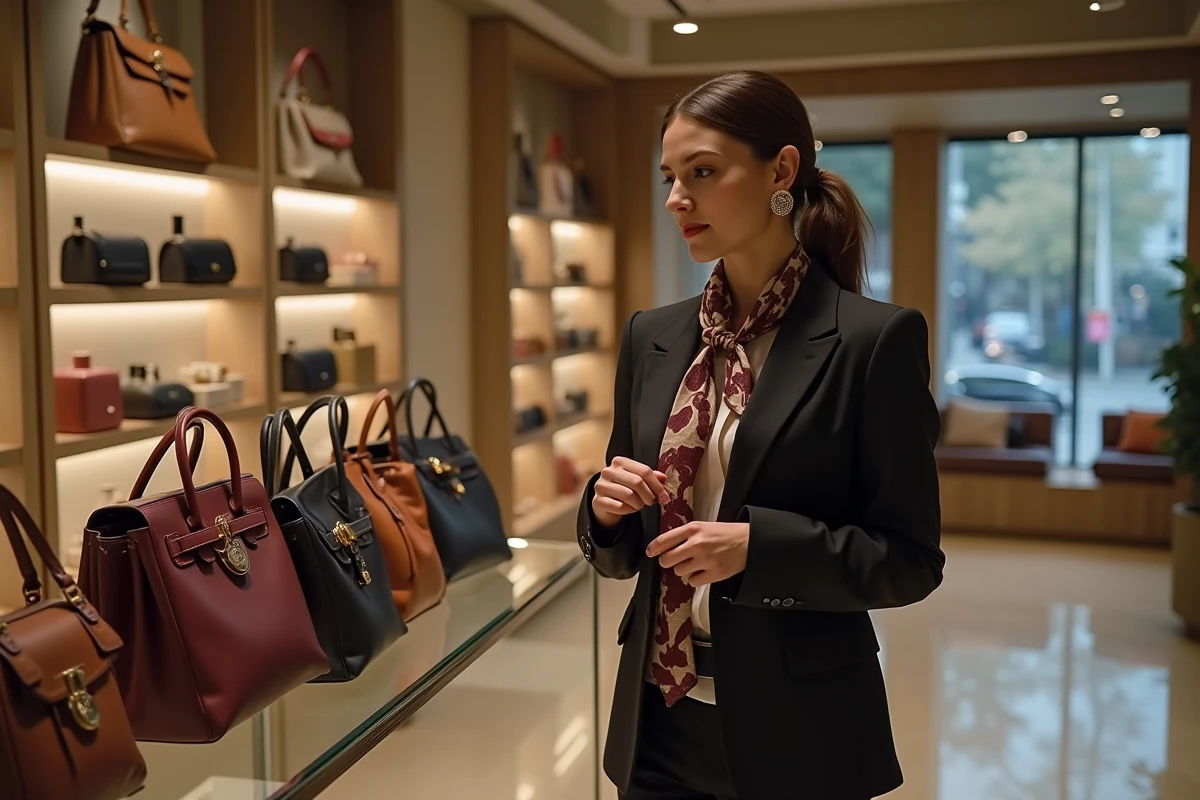
€86.2 billion in revenue in 2023. A figure that seems elusive on paper, but behind this mountain of income lies a brutal reality: more than half comes from a single stronghold, the Fashion and Leather Goods division. LVMH does not dilute; it condenses, it concentrates, it thrives by cultivating pillars where the power of its brands reigns supreme.
The different sectors of LVMH: a tailor-made balance
To understand how LVMH’s dominance is structured, one must look at its five major divisions, each built around brands with a reputation forged over decades. Fashion and Leather Goods dominates the discussions, bringing with it iconic houses: Louis Vuitton, Christian Dior, Celine. These brands embody the rare alliance between a thirst for desirability and flawless control of global distribution.
Next come Perfumes and Cosmetics, which include both Dior and Guerlain. Here, constant innovation and breakthroughs in rapidly expanding markets, from Asia to the United States, drive growth. The Watches and Jewelry division has gained ground since the arrival of Tiffany, but maintains a more moderate pace.
Wines & Spirits, with its historic houses, is more dependent on global economic cycles, while Selective Distribution, think Sephora or DFS, plays a laboratory role where business models evolve to continually meet market appetite.
Those wishing to explore in depth the distribution of these forces and internal balances can consult the key divisions of LVMH according to cBusiness.
Which sectors contribute most to LVMH’s profitability?
The breakdown of margins within the group leaves no room for doubt. Fashion and Leather Goods outperforms everything: Louis Vuitton, for example, often exceeds 40% operating margin. The performances of Christian Dior and Celine are not far behind, consolidating this flagship division’s grip on the group’s growth and profits.
Here is a benchmark, sector by sector, on profitability and weight in LVMH’s revenue:
| Sector | Operating Margin | Revenue (billion €) |
|---|---|---|
| Fashion and Leather Goods | Above 40% | About 42 |
| Perfumes and Cosmetics | Between 15% and 20% | About 8 |
| Watches and Jewelry | Around 16% | About 10 |
| Wines and Spirits | About 28% | About 6 |
The momentum driven by Fashion and Leather Goods shows no signs of weakening. Asia, the United States, and Europe relay a solid demand that is anything but a flash in the pan. Wines & Spirits boasts solid profitability thanks to the continuous premiumization of its iconic brands. The Perfumes and Cosmetics division is progressing, though it has not reached the striking power of the flagship sector. The Watches and Jewelry division plays for consistency. As for Selective Distribution, driven by Sephora, it weighs in, but its margins remain behind the profitability of the pillar houses.
Why LVMH attracts investors: opportunities and risks on the horizon
LVMH embodies this unique ability to withstand crises and generate margins that leave most listed groups pale. Its growth is fueled by the vitality of Fashion, the performance of Wines and Spirits, and a consistently sharp management.
What captures shareholders’ attention
Several arguments explain the stock market enthusiasm that LVMH enjoys:
- The consistency of the dividend, which has exceeded €12 per share in recent years.
- A renewed growth engine thanks to expansion in Asian and American markets.
- The ability of its brands to set their prices and impose their image, even in an ultra-competitive market.
However, markets remain attentive to growth management, continuous innovation, and strict cost control. Despite the strength of its model, dependence on China or certain regions brings its share of uncertainties. A slowdown in a key market could impact the stock, even if internal diversification cushions the shocks well.
Economic fluctuations, geopolitical tensions, regulatory uncertainties, currency fluctuations… challenges are never far away. Those betting on LVMH accept a degree of unpredictability: in the luxury sector, there is no lasting victory for those who do not anticipate and adapt. The next wave will come, and the group’s story will remain, for a long time, impossible to write in advance.